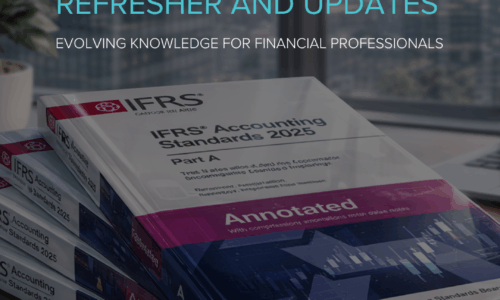
IFRS 17 Insurance Contracts will fundamentally change the accounting requirements for insurers. The insurer will need to use new measurement models and accounting principles, which will increase the comparability of financial statements. This will result in significant changes to how the profit will be recognised, the way the financial information will be presented, and the adoption of the standard will need extensive planning. There are a number of decisions and choices to be made when implementing the new standard. Our IFRS 17 Insurance Contracts specialists will explain the key areas of risk and critical success factors in an IFRS 17 implementation project.
Our course is designed to get an initial working knowledge of the rules as set out by The IFRS Foundation, how the numbers are constructed and presented and the story that they are telling.
TARGET COMPETENCIES
As a result of completing IFRS 17 Insurance Contracts, all participants will improve their knowledge, understanding and analytical skills of IFRS, with the following benefits:
- Minimize the learning curve for getting up to speed on IFRS 17
- Appreciate the major technical differences between the existing IFRS 4 and IFRS 17 requirements
- Evaluate the significant impact of these differences through the use of real-world financial statements
- Providing a vital first-time appreciation of IFRS 17 that will help to plan ahead for its implementation
- Evaluate the method and timetable for transition to IFRS 17
- Understand the requirements for transition to IFRS 9 Financial Instruments for insurance companies
WHO SHOULD ATTEND ?
- This course is designed for those who wish to learn about the critical technical differences between the accounting and reporting requirements of existing IFRS 4 (and industry practice) and IFRS 17.
- It will be highly relevant to finance, risk and actuarial team members preparing for the changes in insurance contract accounting practice.
- The course is designed for executive officers, industry controllers, analysts, actuaries, auditors and finance professionals who wish to gain a working knowledge of this large new standard.
COURSE OUTLINE
This IFRS Training comprehensive accounting standards training course will enable each participant to appreciate and understand the basics and certain complexities associated with international accounting standards along with topic terminology, concepts and applications.
In gaining a perspective of the origins of IFRS, the accomplishments, to date, in the development and acceptance of global accounting standards and insights into the foreseeable future, participants will gain a valuable understanding of this critical field of knowledge and be capable of contributing meaningful assistance to their respective organisations with respect to the adoption and utilisation of these accounting standards.
Scope and definitions
- IFRS 17 scope exclusions
- Identifying insurance contracts and insurance risk
- Unbundling non-insurance elements contained within contracts with customers
Determining the unit of account – aggregation and groups of contracts
- Portfolios
- Time related cohorts
- Groups of contracts – the unit of account
IFRS 17 accounting models
- Outline of the accounting models available
- A simple numerical introduction to the general model
- Explanation and illustration of the “building blocks” approach
IFRS 17 measurement and presentation – the general model
- The general model explained step by step with worked examples
- Initial recognition
- Subsequent measurement
- Presentation in the statement of comprehensive income
IFRS 17 measurement and presentation – the premium allocation approach
- Eligibility
- The PAA – initial recognition and subsequent measurements explained step by step with worked examples
IFRS 17 measurement and presentation – modifications to the general model
- Accounting for reinsurance contracts held
- Contracts with direct participation features
- Contracts with discretionary participation features
Other topics
- Contract modifications
- Derecognition of insurance contracts
Transitional rules
- Explanation and illustration of the three IFRS 17 approaches:
- Fully retrospective
- Modified retrospective
- Fair value
- Transition disclosures
IFRS 17 presentation and disclosure
- Presentation in the primary financial statements
- A detailed review of the disclosure regime applied by IFRS 17
- Identification new data requirements to comply
IFRS 9
- IFRS 9 adoption for insurers:
- Overlay approach
- Deferral approach and
- Transition requirements
- Classification and measurement:
- Classification of financial assets based on business model and nature of cash flows
- Redesignation of financial assets on adoption of IFRS 17
- Classification of financial liabilities
- Expected credit loss impairment model:
- General model
- Simplifications
- Practical expedients
- Hedge accounting:
- IFRS 9 updates
- Disclosures:
- Qualitative and quantitative disclosures
VENUE:
Choice between in-house / External Venue/ Live Online Classroom
Do you have more people interested in attending this course? Do you want to tailor it to meet your company’s exact requirements? If you’d like to do either of these, we can bring this course to your company’s office. You could even save more on the cost of sending delegates to a public course and dramatically increase your ROI.
If you want to run this course at a location convenient to you or if you want a completely customized learning solution, we can help.
We produce learning solutions that are completely unique to your business. We’ll guide you through the whole process, from the initial consultancy to evaluating the success of the full learning experience. Our learning specialists ensure you get the maximum return on your training investment.
DURATION:
2 days
COST:
ZAR 24,999.00
Contact us for our discounted pricing for self-funded individuals
Course Features
- . 1
- Quiz 0
- Duration 35 hours
- Skill level All levels
- Language English
- Students 26
- Assessments Yes
Curriculum
- 1 Section
- 1 Lesson
- 2 Days
- TRAINING ENQUIRY FORM1