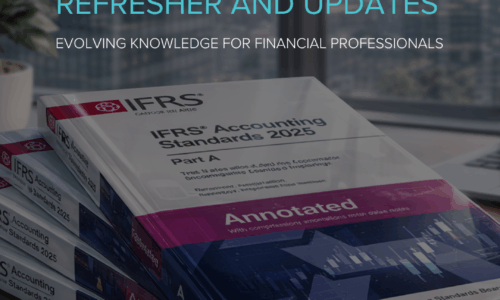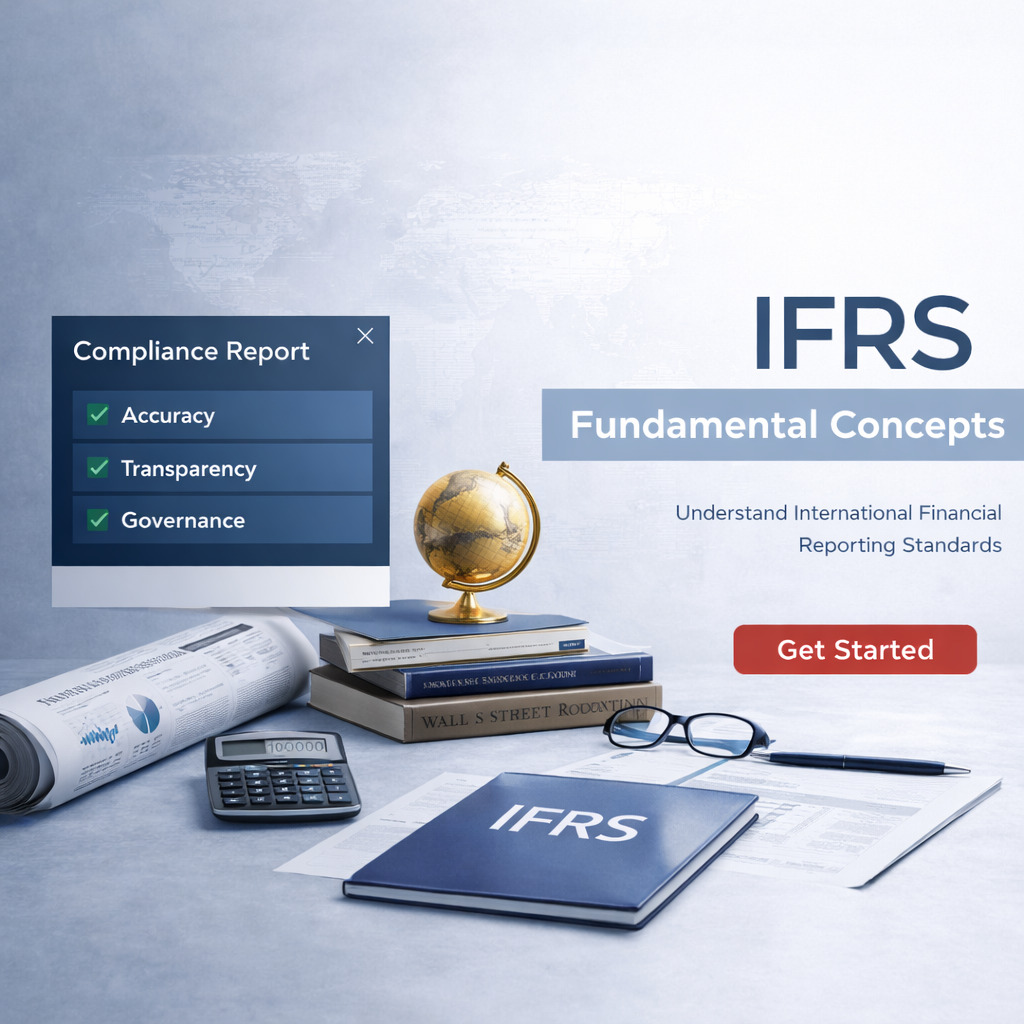
The IFRS Fundamental Concepts course will help build the knowledge you need in IFRS for success in today’s global business world. Like you, we believe those who understand and apply IFRS will enjoy expanded career opportunities as its use is spreading around the world. Developed with input from subject matter experts from across the region, this course is designed to provide accounting and finance professionals with the training, knowledge and practical guidance needed to use IFRS as set out by The IFRS Foundation.
TARGET COMPETENCIES:
By the end of IFRS Fundamental Concepts, participants will be able to:
- Describe the setting process in IFRS and list the currently available standards
- Explain the most recent updates on existing IFRS and evaluate the effect of newly issued standards on their organization
- Determine the correct presentation and minimum disclosure for components of statements of financial position, statements of comprehensive income, statements of owners’ equity, and statements of cash flows in accordance with IFRS
- Appraise and properly account for transactions affecting current assets and liabilities, non-current assets and liabilities, and revenues and expenses in accordance with IFRS
- Use professional judgment in applying IFRS for matters relating to non-recurrent business transactions
WHO SHOULD ATTEND ?
Professionals in the fields of finance and accounting as well as professionals seeking to enhance their international accounting knowledge from companies implementing IFRS as the standard of reporting.
Accounting Professionals
- Financial Executives
- Auditors
- Financial Analysts
- Bankers
- Investment Bankers
…..and all Executives in accounting, reporting and/or controlling area.
COURSE OUTLINE :
This IFRS Training comprehensive accounting standards training course will enable each participant to appreciate and understand the basics and certain complexities associated with international accounting standards along with topic terminology, concepts and applications.
In gaining a perspective of the origins of IFRS, the accomplishments, to date, in the development and acceptance of global accounting standards and insights into the foreseeable future, participants will gain a valuable understanding of IFRS Fundamental Concepts and be capable of contributing meaningful assistance to their respective organisations with respect to the adoption and utilization of these accounting standards.
Introduction to IFRS
- Brief history of IFRSs
- Conceptual Framework
- Fair value measurement (IFRS 13)
IFRS rules for current assets and liabilities
- Cash and cash equivalents (IFRS 9)
- Accounts receivable (IFRS 9):
- Allowance for doubtful and bad debts: based on new impairment model of IFRS 9
- Pledging, assigning and factoring of receivables
- Accounts payable and accruals (IFRS 9)
- Inventory (IAS 2):
- Ownership: when to include inventory in your books
- Measurement at initial recognition: what to include in ‘cost’
- Inventory cost-flow assumptions
- Subsequent measurement: lower of cost or net realizable value
IFRS rules for non-current assets and liabilities
- Property, plant and equipment (IAS 16):
- Initial recognition and subsequent measurement
- Cost model versus revaluation model
- Assets held-for-sale (IFRS 5)
- Treatment of decommissioning costs (IAS 37)
- Impairment of property, plant and equipment (IAS 36)
- Intangible assets (IAS 38)
- Why some intangible assets are not recognized on balance sheet
- Cost model versus revaluation model
- Investment property (IAS 40)
- Distinguishing investment property from other assets
- Cost model versus fair value model
- Provisions, contingent liabilities and contingent assets (IAS 37)
Financial assets (IFRS 9)
- Type of investment securities
- Classification under IFRS 9: Fair Value Through Profit or Loss (FVTPL), Fair Value Through Other Comprehensive income (FVTOCI), amortized cost
- Initial recognition and subsequent measurement
- Transfer between categories
- Impairment of financial assets under the new standard
Revenue from contracts with customers (IFRS 15)
- Scope of IFRS 15
- Describing the five-step model framework under IFRS 15
- Step 1: Identifying the contract with the customer
- Step 2: Identifying the performance obligations in the contract
- Step 3: Determining the transaction price
- Step 4: Allocating the transaction price to the performance obligations in the contract
VENUE:
Choice between in-house / External Venue/ Live Online Classroom
Do you have more people interested in attending this course? Do you want to tailor it to meet your company’s exact requirements? If you’d like to do either of these, we can bring this course to your company’s office. You could even save more on the cost of sending delegates to a public course and dramatically increase your ROI.
If you want to run this course at a location convenient to you or if you want a completely customized learning solution, we can help.
We produce learning solutions that are completely unique to your business. We’ll guide you through the whole process, from the initial consultancy to evaluating the success of the full learning experience. Our learning specialists ensure you get the maximum return on your training investment.
DURATION:
3 days
COST:
ZAR 18,999.00
Contact us today for our discounted pricing for self-funded individuals
Course Features
- . 1
- Quiz 0
- Duration 25 hours
- Skill level All levels
- Language English
- Students 15
- Assessments Yes
Curriculum
- 1 Section
- 1 Lesson
- 3 Days
- TRAINING ENQUIRY FORM1